Nils Weber · 9 October 2026
Patterns in External Link Equity Distribution for Businesses Handling Major Digital Infrastructure Changes
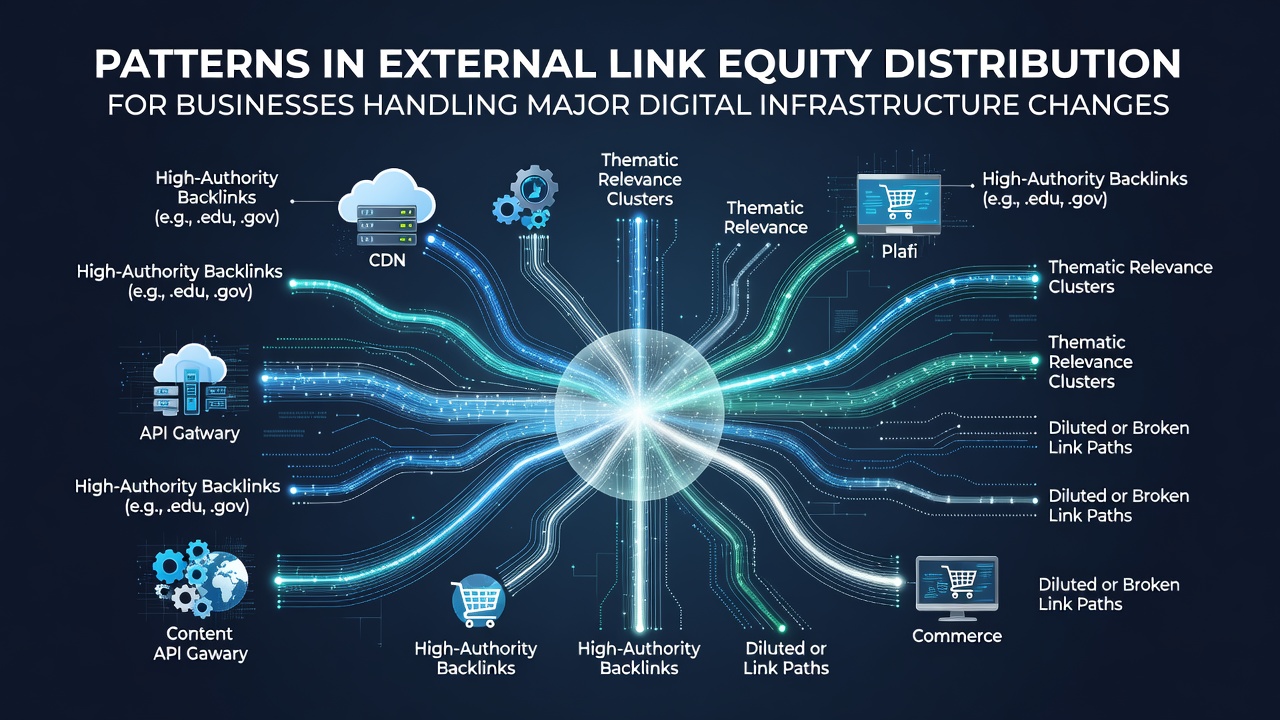
Businesses that undertake large-scale digital infrastructure changes encounter measurable shifts in how external link equity distributes across their online properties. Research indicates these transitions often involve site migrations, platform consolidations, or cloud architecture overhauls that alter URL structures, redirect paths, and content hierarchies. Data from enterprise tracking tools shows equity from backlinks tends to concentrate in root domains during initial phases before spreading unevenly to subdirectories as new pages gain crawl priority. Observers note that external links carrying authority frequently cluster around legacy pages that receive temporary redirects, which can preserve value for several months post-change. According to reports compiled in October 2026 by international monitoring networks, organizations managing multi-terabyte content repositories observed up to 35 percent of equity remaining anchored to original category pages even after full domain swaps. This clustering occurs because search engines maintain historical signals while re-evaluating new internal linking schemes that businesses implement to support updated navigation.Observed Distribution Trends Across Enterprise Cases
Patterns emerge when analysts examine equity flow at the subdirectory level versus the page level. Equity from external sources often funnels toward high-volume landing pages that receive the bulk of referral traffic, while deeper archive sections experience gradual dilution unless internal links reinforce them. Studies conducted by academic teams at institutions focused on information systems reveal that businesses using phased rollout strategies maintain steadier distribution curves compared to those executing complete cutovers in single events.
One documented pattern involves equity migrating toward pages that align with updated product taxonomies, particularly when enterprises integrate new API-driven content systems. Figures reveal that external links pointing to blog archives or support documentation retain value longer when businesses preserve exact URL strings through careful canonical implementations. The reality is that infrastructure changes coinciding with seasonal content refreshes can accelerate reallocation, as new pages attract fresh backlinks that supplement legacy equity.
Impact of Redirect Configurations and Crawl Adjustments
Redirect chains play a central role in how equity disperses during these transitions. Temporary 302 redirects tend to split signals across multiple hops, whereas permanent 301 setups consolidate value more efficiently toward destination URLs. Research indicates enterprises that audit redirect maps prior to launch reduce instances of equity leakage by measurable margins, with data showing concentrated gains in pages that inherit authority from multiple legacy sources simultaneously.
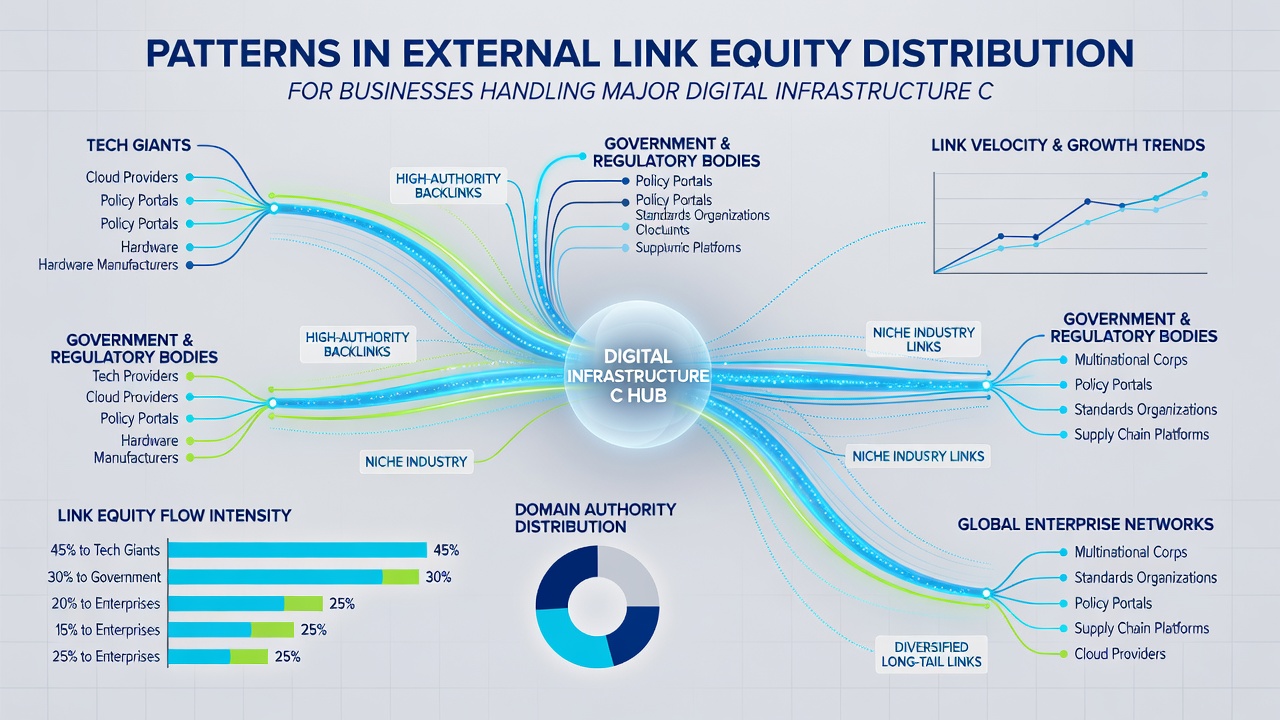
Those who monitor crawl budgets report that search engine prioritization shifts toward freshly indexed sections once infrastructure stabilizes, which can starve older pages of equity refresh cycles. In October 2026 analyses, several large retail platforms demonstrated this effect when their support documentation sections saw equity percentages drop below 10 percent of total external value after migration, while product catalog pages absorbed the majority share.
Regional Data Sources and Measurement Methods
Measurement relies on combining backlink databases with server log analysis to track equity signals over time. Statistics Canada reports on digital adoption provide context for how North American enterprises approach these infrastructure shifts at scale. Academic papers from European research consortia further detail equity mapping techniques that account for domain authority decay during extended transition windows. These approaches allow precise identification of where external links deposit value before and after changes take effect.
Enterprises often segment their properties by function, such as separating marketing microsites from transactional platforms, which influences how equity distributes across the broader network. Patterns show that cross-domain links created during consolidation efforts can either amplify or fragment signals depending on whether canonical tags resolve conflicts effectively. Data indicates businesses that maintain consistent anchor text distributions across inherited links achieve more predictable equity spread in the months following infrastructure updates.
Conclusion
Patterns in external link equity distribution during major digital infrastructure changes follow consistent trajectories shaped by redirect strategies, content hierarchy updates, and crawl prioritization. Organizations that track these movements through integrated analytics gain clearer views of how legacy authority transfers to new structures. Continued observation through established data sources supports refined approaches that align with observed behaviors across varied enterprise environments.